Workshop on software strategies for sustainable physical modelling
Keynote speakers
Daan Degrauwe (RMIB)
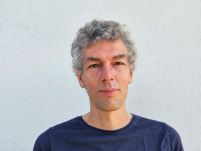
After getting a PhD in civil engineering at the University of Leuven, he joined the royal meteorological institute of Belgium in 2008. He has worked on various aspects of the ALADIN/ACCORD numerical weather prediction model. His work includes research on the treatment of lateral boundary conditions, developing a general flux-conservative physics-dynamics interface and investigating the use of a multigrid Krylov solver for the semi-implicit timestepping. Between 2020 and 2025, he was area leader for code refactoring and adaptation in the ACCORD consortium, overseeing the efforts to port the ACCORD model to GPUs. He also teaches the course on Numerical Techniques in the Postgraduate Program for Weather and Climate Modelling at the University of Ghent.
Presentation: Porting physics parametrizations from Fortran to gt4py with source-to-source translation tools
Abstract: Achieving performance portability is a challenge in the quickly-evolving present-day HPC landscape. This is especially the case for physics parameterizations in numerical weather models. These parameterizations often have been written with a focus on scientific novelties rather than on performance and/or portability. To reconcile the target of performance portability with the scientific content of these parameterization schemes, it was investigated if the existing implementation in Fortran can be transformed into a modern domain-specific language like gt4py. We consider the concrete case of the ICE3 microphysics parameterization that is used by the ACCORD limited area model and by the Meso-NH research model. As the code base of this parameterization is quite extensive, source-to-source translation tools were used to automate the process of converting Fortran code into gt4py code. While this exercise resulted in a functioning and portable version of ICE3, questions remain about the maintainability and the performance of this version.
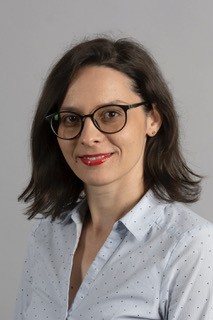
Dr. Georgiana Mania is a Research Software Engineer at the German Climate Computing Center in Hamburg, Germany. Her research focuses on achieving performance portability of the weather and climate model ICON, exploring parallel programming languages, and redesigning the code to enable kilometer scale simulations. In addition to her research, Georgiana contributes to academic teaching activities at the University of Hamburg and Magdeburg and delivers tutorials at various events. Georgiana completed her PhD in High-Performance Computing on heterogeneous architectures for High-Energy Physics simulations at the University of Hamburg in 2023. Prior to pursuing her academic career, she gained industry experience in software engineering. Georgiana holds an Engineering Degree in System Engineering and Computer Science from the University Politehnica of Bucharest.
Presentation: Enabling Performance Portability in ICON with C++/Kokkos: The Ragnarok Approach
Abstract: Modern supercomputers provide unprecedented opportunities for high resolution weather and climate simulations, but their increasingly heterogeneous CPU–GPU architectures pose major challenges for Earth system models. To efficiently exploit these systems, legacy Fortran-based codes must evolve toward performance-portable, maintainable, and scalable software architectures. Within the Ragnarok project, we are transitioning the ICON model from Fortran to modern C++ using the Kokkos programming model to achieve performance portability across current and emerging high performance computing platforms. Our approach follows an incremental rewrite strategy that enables interoperability between legacy Fortran components and newly developed C++ modules, allowing continuous scientific production while modernizing the code base. The initial focus is on the AES physics components used in kilometre-scale climate simulations.
Alongside the migration effort, we are establishing a comprehensive software engineering framework including automated unit and integration testing, code formatting, and linting to ensure correctness, maintainability, and long-term sustainability. This presentation will discuss the architecture and technical design of Ragnarok within ICON, the challenges encountered during the transition process, and first results demonstrating performance and portability
across heterogeneous HPC architectures.
Philippe Marguinaud (Météo-France)
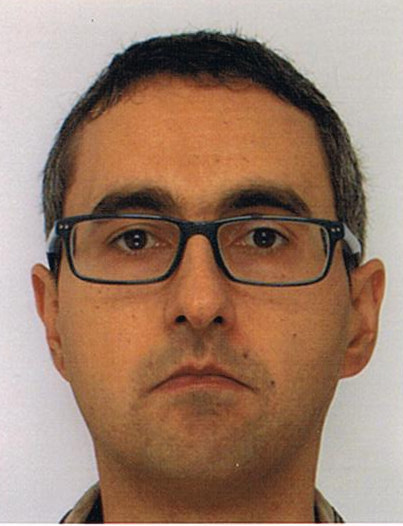 Philippe Marguinaud is a High-Performance Computing (HPC) engineer at Météo-France, where he has worked for more than 20 years on the development and optimization of numerical weather prediction (NWP) models. His current work focuses on porting operational forecasting models to new supercomputing architectures, including GPU-accelerated systems, and improving their performance and scalability.
He has contributed to the modernization of Météo-France's computing infrastructure through the preparation of benchmarks for successive supercomputer procurements, the coordination of GPU porting activities for operational NWP models, and the development and maintenance of scientific data formats and software tools. His technical expertise includes Fortran, C/C++, MPI, OpenMP, OpenACC.
Philippe Marguinaud is a graduate of the École Polytechnique and the École nationale de la Météorologie. His interests include high-performance computing, scientific software engineering, and numerical weather prediction.
Presentation: Refactoring ARPEGE/IFS for porting to GPU accelerators
Abstract: The modernization of computing resources at Météo-France required the preparation of an ARPEGE benchmark capable of running on GPU accelerators. The porting of ARPEGE began in 2021 as part of the broader supercomputer renewal project. Given the constraints associated with this software, the approach adopted by Météo-France and ECMWF for the porting process is unconventional: it relies on a substantial refactoring of the code, combined with the use of scripts to transform it so that it could run efficiently on accelerators.
This refactoring significantly altered the structure and organization of the ARPEGE/IFS code. Persistent and semi-persistent field data arrays were encapsulated into "Field API" objects, enabling proper management of data transfers and consistency between the CPU and the accelerator. Computational sections of the code were redesigned to allow automated transformation with scripts, to simplify memory management, through the use of automatic arrays, and to eliminate global variables, thereby preventing side effects. In addition, persistent data that are not fields were revised to ensure their immutability during the execution of a time step.
As a result of this work, a fully GPU-enabled ARPEGE benchmark, running on NVIDIA accelerators, was delivered to the Météo-France computing project in autumn 2024. This presentation outlines the modifications that were implemented, their impact on the software, and their role in enabling efficient porting to accelerator-based architectures.
David Simonin (Met Office)
 David is a Strategic Head at the Met Office, where he manages the surface-based observations assimilation group as well as leading the development of the Met Office's next-generation observation processing and data assimilation system using the Joint Effort for Data assimilation Integration (JEDI) framework. David completed an MSc in Oceanography and a PhD on the automatic detection of internal waves in SAR imagery, both at the University of Southampton. After five years in the private sector working on Arctic sea-ice research and products, he joined the Met Office in 2007 as a research scientist in the Data Assimilation group at Reading. His research focused on improving convective-scale regional NWP through the assimilation of weather radar observations and improved treatment of correlated observation errors.
Presentation: From Sovereignty to Consortium : A Journey toward Collective Development
Abstract: The Met Office has historically maintained full sovereignty over its modelling infrastructure, from the Unified Model (UM), developed in the 1990s, to its observation processing (OPS) and data assimilation (VAR) systems, all within a proprietary software model. However, this infrastructure was ill-equipped for next-generation HPC architectures, including exascale systems and GPUs. In response, a major programme was launched to reimagine the entire Met Office modelling pathway and take advantage of emerging advances in HPC design. As part of this work, the Met Office also changed its approach to software ownership, adopting more modern practices and moving towards an open-source model. The clearest example is its collaborative development of its new observation processing and data assimilation system using the Joint Effort for Data assimilation Integration (JEDI) framework.
In this talk, I will describe our journey from proprietary systems such as OPS and VAR to a fully open-source, collaborative model based on JEDI. This transition has required a significant shift in how we develop, review, test and maintain scientific software: moving from internally managed codebases towards shared repositories, community governance, continuous integration and open collaboration with external partners. I will also discuss how these practices have shaped the development of operational-quality code and systems currently used operationally at the Met Office. The talk will conclude by highlighting the benefits and opportunities that this shift in software management has created for our research and development activities.
Yannick Trémolet (JCSDA)
 Dr. Yannick Trémolet joined the Joint Center for Satellite Data Assimilation (JCSDA) in 2017 to lead the Joint Effort for Data assimilation Integration (JEDI), a collaboration among NOAA, NASA, the US Air Force, the US Navy, and the Met Office to develop a next-generation data assimilation system. JEDI is built on the idea that many components of data assimilation systems are common regardless of the forecast model, and that modern programming techniques enable those components, and the associated development and maintenance costs, to be shared. Dr. Trémolet designed the JEDI system and leads its development team.
Before joining the JCSDA, he worked at the European Centre for Medium-Range Weather Forecasts (ECMWF), where he initiated and led the Object-Oriented Prediction System (OOPS) project, aimed at making the ECMWF data assimilation system more scalable and more flexible for scientific investigation. He contributed to 4D-Var development—including a weak-constraint formulation—and to the scalability and efficiency of variational data assimilation. Dr. Trémolet has extensive experience with a variety of data assimilation systems, having also worked at NASA/GMAO and NOAA/EMC. He holds a PhD in applied mathematics; his main research interests are data assimilation methodology and high-performance computing.
Presentation: Flexible strategies for future data assimilation
Abstract: Disruptive technologies such as GPU accelerators have been available for almost a decade, and their use in operational NWP has been discussed for nearly as long, yet they have still to be adopted in operational settings. In recent years we have seen an unexpectedly rapid rise of AI/ML for weather forecasting, going from non-existent to initial operational use in just two or three years. No operational system was prepared for change this fast, so these methods have been deployed as standalone applications alongside traditional systems.
So far, these technologies have been tested almost exclusively in forecast models. Although data assimilation is a key element of the forecasting process—some would argue more important than the forecast model itself—it is considerably more complex, which has slowed the adoption of new technologies.
The Joint Effort for Data assimilation Integration (JEDI) is a collaboration among NOAA, NASA, the US Air Force and Navy, and the Met Office to develop a next-generation data assimilation system. It is built on the premise that many components of data assimilation systems are common regardless of the forecast model, and that modern programming techniques allow those components—and their development and maintenance costs—to be shared while still accommodating the needs of each application.
Some of the technological changes noted above were not foreseen at the outset of the JEDI project. We will show how modern programming techniques yield a more flexible system that enables fast development turnaround and rapid adaptation to technological and scientific change, and we will discuss how a system like JEDI affects work culture and practices.