2026 Workshop on Machine Learning for Land and Hydrology
Supports and Organising Committee
Organising Committee
Dr. Maria Luisa Taccari

Maria Luisa is a researcher at ECMWF specializing in scientific machine learning and hydrology. Working within the Destination Earth initiative, she develops ML workflows for river discharge forecasting and is currently a Visiting Scientist at the JRC. She holds a PhD from the University of Leeds and previously worked at Deltares.
Dr. Nina Raoult
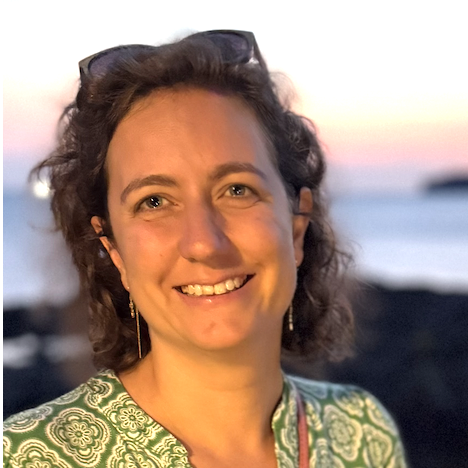
Nina is a research scientist at the ECMWF, specialising in land surface modelling, parameter estimation, and machine learning. She is currently involved in the Destination Earth initiative, working to build a data-driven Earth System model. Her work includes ensuring the representation of land surface variables in the AIFS (ECMWF’s fully data-driven forecast model) and developing an offline emulator of their surface scheme. Her previous experience includes an ESA CCI fellowship at LSCE in France and a Marie Curie fellowship at the University of Exeter, where she worked with a wide range of observational products, land surface models, and statistical and machine learning techniques. Nina is a core member of the team leading the Land Calibration Model Intercomparison Project (CalLMIP) and part of GEWEX's ML4LM (Machine Learning for Land Modelling) working group.
Dr. Kenza Tazi

Kenza is a research scientist at the ECMWF, where she applies and develops machine learning models to help predict floods worldwide. Her broader research interests include understanding prediction uncertainties and how they can be used for climate change adaptation. Kenza has previously worked on problems such as precipitation prediction, cloud identification, and wildfire forecasting. She holds a PhD in applied machine learning from the University of Cambridge and British Antarctic Survey and an integrated master’s in physics from Imperial College London.
Dr. Jana Kolassa
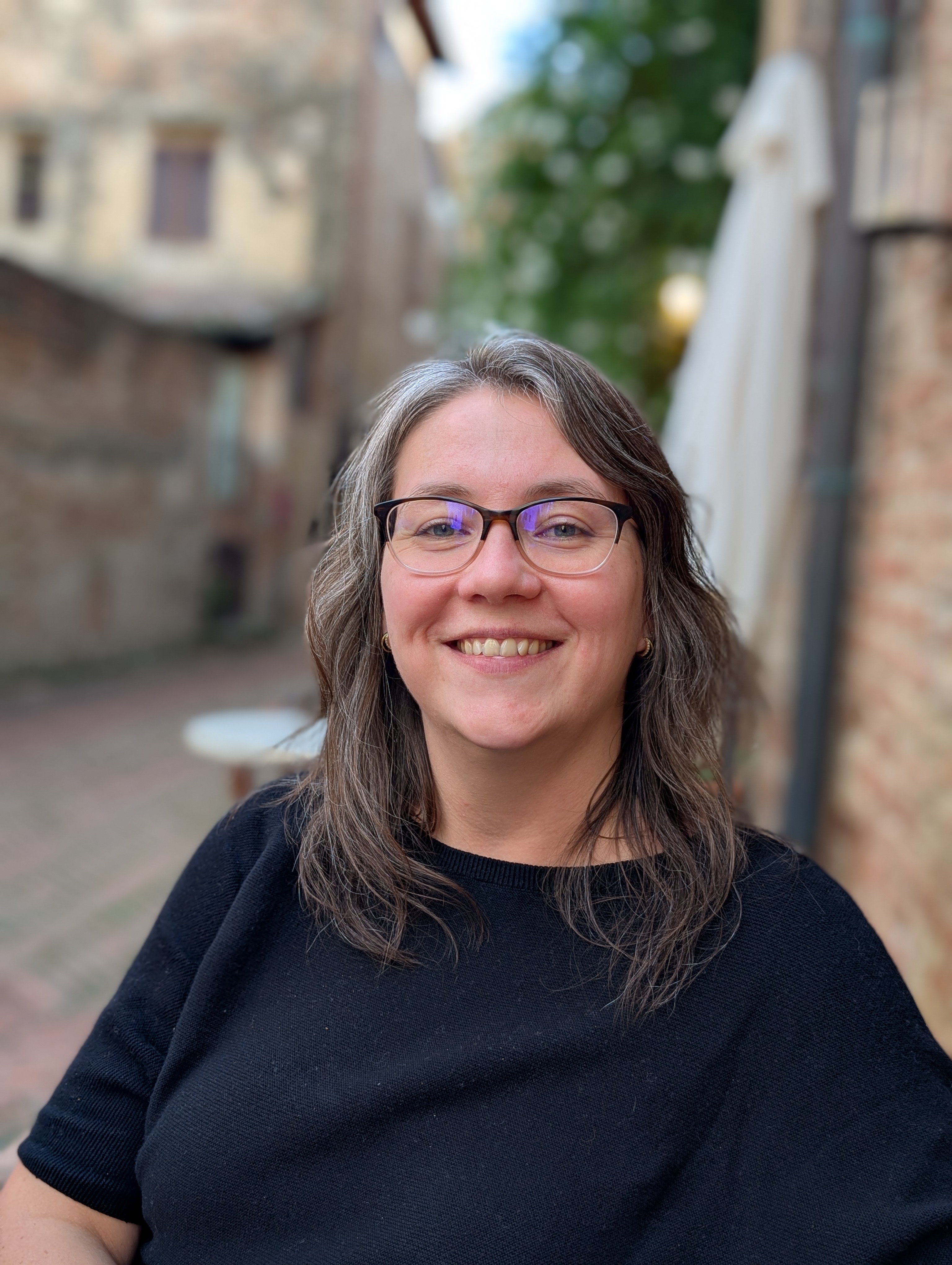
Jana is a researcher in the Coupled Data Assimilation team at the European Centre for Medium-Range Weather Forecasts (ECMWF). Her work centers on advancing machine learning methodologies for land data assimilation, with a particular focus on leveraging active and passive microwave observations to better constrain land surface states. Before joining ECMWF, she worked at the Global Modeling and Assimilation Office (GMAO) at NASA’s Goddard Space Flight Center, where she led the development of the NASA Catchment-CN land surface model and contributed to the assimilation of SMAP brightness temperature observations. She was also a member of the SMAP Science Team, investigating the potential of assimilating SMAP soil moisture data to enhance the prediction of tropical cyclone landfall behaviour within numerical weather prediction systems. She is a member of the AIMES Land Data Assimilation Working Group, the Calibrated Land Model Intercomparison Project (CalLMIP) steering committee, and the GEWEX Machine Learning for Land Modelling (ML4LM) working group.
Dr. Hamidreza Mosaffa
Hamidreza is a Marie-Curie postdoctoral fellow jointly affiliated with the University of Reading, the European Centre for Medium-Range Weather Forecasts (ECMWF), and the University of Oxford. His research focuses on the development of machine learning methods for high-resolution flood inundation forecasting, with an emphasis on the use of satellite Earth observation data. Prior to this role, he was a researcher at the University of California, Irvine, the National Research Council of Italy, and the ESA ESRIN, where he contributed to several ESA-funded hydrology projects, including Hydrology-Next, DTE Hydrology, 4D-MED Hydrology, and extrAIm, focusing on satellite precipitation estimation and flood risk modelling using machine learning approaches.
Supports
We acknowledge the support of the ML Pilot Project, Destination Earth, GEWEX ML4LM, in addition to our collaborators and other partners.
Destionation Earth: https://destine.ecmwf.int/ml-earth-system-components/
GEWEX ML4LM: https://www.gewex.org/project/ml4lm/